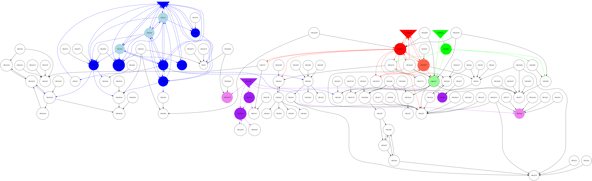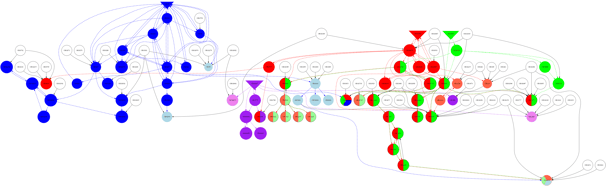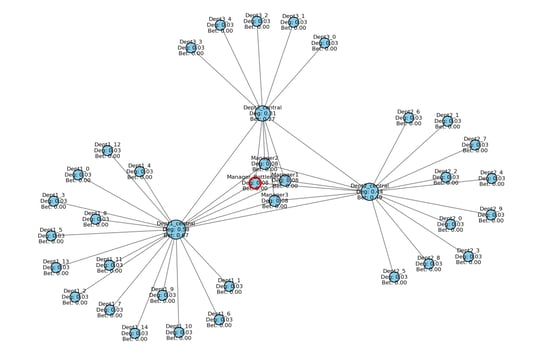
Human-Resources Network Analysis: Enhancing Collaboration and Trust
What We Offer:
Discover Informal Leaders: Identify key influencers and their impact.
Measure Organisational Democracy Degree: Gain insight into economic-legal, organisational-strategic and structural-representational dimension.
Boost Productivity: Enhance team cohesion and reduce isolation.
Foster Innovation: Strengthen collaboration for breakthrough ideas.
Improve Communication: Uncover and resolve bottlenecks.
How it works?
Using simple, targeted surveys, we map and analyse your internal network to provide actionable insights that transform your organisation.
Loyalty Insights: Tracks employee interactions to assess loyalty and identify disengagement.
Trust Evaluation: Measures trust levels through communication patterns and feedback.
Collaboration Willingness: Identifies employees eager to collaborate and those working in silos.
Sentiment Analysis: Analyses internal communication to gauge team sentiment and detect potential issues.
Recommendation Engine: Offers actionable recommendations to enhance loyalty, trust, and collaboration.
The Organisational Democracy Degree (ODD) :
Provides a precise Organisational Democracy Degree (ODD) score for comparison across time or between organisations.
Framework consists of three independent blocks: economic-legal, organisational-strategic, structural-representational.
Modular approach adapts to management needs and data availability.
Enables evaluation of how changes in parameters affect overall ODD.
Dyadic Hierarchy (DH) and Topological Hierarchy (TH) derive from Power Distribution in Organisational Structures.
Why It Matters?
Align influence networks with company goals.
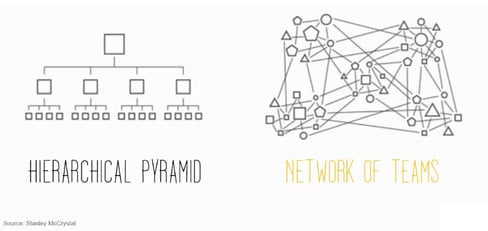
Reshape your organisation into more horizontal structure.
Drive strategy execution and financial returns.
Enhance sales, customer connectivity, and post-merger integration.
Who Could Benefit?
HR Teams: Gain insights into employee engagement, trust, and collaboration to shape retention strategies and improve workplace dynamics.
Post-Merger Integration Teams: Smooth transitions by understanding and aligning cultural and organisational networks.
Innovation Teams: Foster collaboration to accelerate breakthrough ideas and strategic initiatives.
IT and Digital Transformation Teams: Enhance adoption of new tools and processes by leveraging trusted influencers.
Contact us!
Contact us to discover how Human-Resources Network Analysis can elevate your business to new heights.
Your organisation’s true strength lies in its unseen network of relationships between employees and organisational units, like offices, task forces, teams, etc. BNAnalytics helps you uncover their vertical (alongside authority relationships) and horizontal (collaboration relationships) connections and patterns, and leverage this hidden potential to drive success.
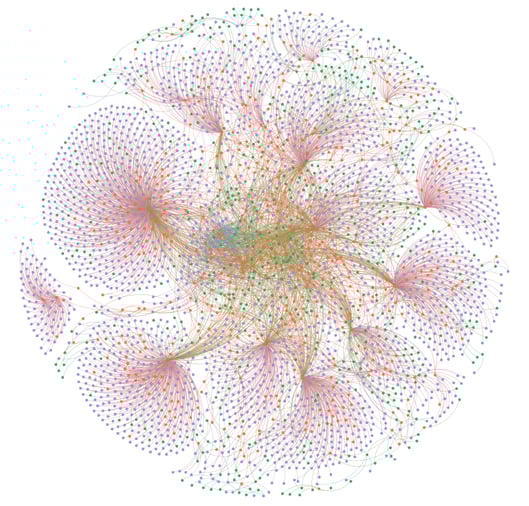
Network-Based Business Analytics: Insight into structural dimension
How It Works?
You select the params of analysis, such as:
Type: ownership / interlocks / trade / your own type
Geography: region / country / international / global
Scope: industry / group of industries
Time-span: years of analysis
The data comes from external data providers or your own resources.
Why It Matters?
Understanding the structure and dynamics of networks—no matter their type—provides essential insights that drive success:
Strategic Decision-Making: Uncover key actors, partnerships, and opportunities across ownership, trade, interlocks, or any custom network type.
Risk Management: Identify vulnerabilities in connections, dependencies, and influences to mitigate risks effectively.
Competitive Positioning: Gain a clearer picture of your environment to find advantages, recognise trends, and adapt proactively.
Holistic Insights: Combine multiple layers of connections in one meta-network, revealing patterns and relationships you might otherwise miss.
Adaptable Applications: The methodology can be applied to any network, making it a versatile tool for a wide range of industries and goals.
Who Could Benefit?
Corporations: Whether assessing ownership structures, supply chains, or partnerships, gain actionable insights into your business environment.
Financial Institutions: Evaluate risks, dependencies, and opportunities within portfolios, loans, or investments.
Regulatory Bodies: Monitor compliance, governance, and the intricate connections influencing market behavior.
Consulting Firms: Offer clients advanced network-based strategies tailored to their unique challenges and industries.
NGOs and Research Organisations: Map and analyse social, organisational, or environmental networks to identify key drivers and challenges.
Government Agencies: Analyse interdependencies in economic, trade, or infrastructure networks to inform policy-making and resilience planning.
Any Data-Driven Organisation: As long as there’s data, any organisation can gain value from mapping and understanding its networks.
Contact Us!
Let’s transform your perspective on business networks. Reach out to discover how we can help you unlock value and achieve your strategic goals.
Visualise and statistically analyse your networks
What We Offer?
Map actors of your networks and apply the traditional, and some less known, Social Network Analysis metrics to gain insight into their structure. Literally any type of network can be analysed in this framework, provided there is available data. The ones we have experience in and recommend for business are:
Ownership Networks: Trace ownership links and structures.
Board & Manager Interlocks: Explore shared leadership connections.
Trade Networks: Map financial and commercial dependencies.
Analyse the various layers together in one Meta-Network: combine different types of relations together.
Analyse the full network, focus on specific groups, or dive deep into a single company’s role within the ecosystem.

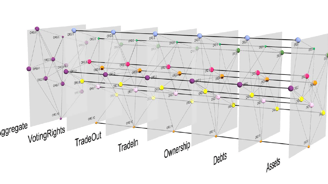
Analytical Methods for Identifying the Groups of Connected Clients: Advanced structural insight
How It Works?
Input Data: AMEG analyses your portfolio as an integrated network, focusing on key relationships, for example:
Ownership
Voting Rights
Trade Relations (In and Out)
Asset Investments
Debt Exposure
Group Identification: AMEG identifies clusters of interconnected entities across various relationship types, combining these into a holistic meta-network.
Dominance Evaluation: It calculates dominance within groups, highlighting key players while offering flexibility to adjust dominance thresholds (0–99%).
Regulatory Alignment: The methodology used to map and analyse your network is precisely what is required to comply with EBA’s GCC normative—making compliance a natural outcome of using AMEG.
Comprehensive Reports: AMEG delivers detailed insights, including lists of group members, their influence, and integrated visualisations of your network structure.
Why It Matters?
AMEG’s true value lies in its ability to uncover the deeper dynamics of any network. By providing insights into groups and dominant actors, AMEG enables you to:
Strategically Navigate Complex Networks: Identify key players and connections to make better-informed decisions.
Proactively Manage Risks: Detect vulnerabilities in ownership, financial exposure, and trade dependencies before they escalate.
Ensure Regulatory Compliance: Easily meet EBA norms as a result of the rigorous methodology built into AMEG’s processes.
Gain a Competitive Edge: Understand your portfolio’s structural dynamics and uncover opportunities for growth and optimisation.
Who Could Benefit?
Corporations: Gain insights into supplier networks, ownership links, or trade dependencies.
Banks and Financial Institutions: Leverage network analytics for credit risk management and natural compliance with EBA’s GCC requirements.
Regulatory Bodies: Monitor compliance and analyse corporate governance across sectors.
Consultancies: Offer cutting-edge, network-based solutions to clients in diverse industries.
Why AMEG and NEBBA are Complementary?
While NEBBA maps inter-company relationships in industries and markets, AMEG specialises in uncovering groups and dominant actors within structured portfolios. Together, they deliver a complete view of interconnections—from ownership and interlocks to compliance and risk.
Contact Us!
Ready to see the full picture of your network? Discover how AMEG helps you unlock hidden value, manage risks, and stay ahead of the game. Let’s transform your understanding of connections—reach out today!
Distinguish sub-components of your networks and detect their most dominant actors. Leverage a tool to comply with the European Banking Authority normative.
What We Offer?
With AMEG, gain unparalleled insights into clusters of interdependent companies in your portfolio network and detect their internal structure of dominance. It allows banks, hedge funds, insurance companies to comply with new regulatory requirements, just like the one from European Banking Authority (EBA) from January 1st, 2019, and identify the Groups of Connected Clients in your portfolio.
Group Discovery: Identify clusters of inter-connected entities within your portfolio.
Dominance Analysis: Detect dominant actors and assess their influence across groups, even with circular relationships.
Dynamic Thresholds: Adjust dominance levels across various relationship types to fit your needs.
Integrated Network Analysis: Map direct and indirect control chains for a comprehensive understanding of your network.
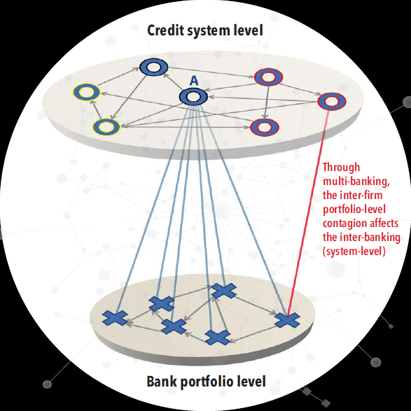
Positional Credit Risk Analysis: Paradigm change
How It Works?
You define the scope of analysis:
Portfolio Coverage: Select the group of obligors or portfolios to analyse.
Applicability: Suitable for all types of obligors, including partnerships and entities lacking extensive financial histories.
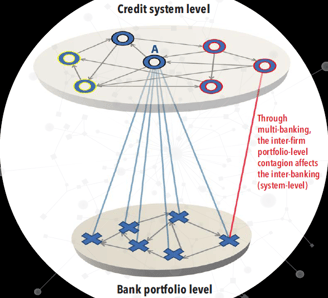
Our PCRA solution leverages network analysis to identify obligors' positional risks within their portfolios and across interconnected networks. These insights are delivered in actionable formats with quantifiable metrics.
Why It Matters?
Detecting and managing systemic contagion within credit portfolios is crucial for both short-term and long-term success:
Short-Term Advantages:
Accurate Portfolio Risk Assessment: Obtain the true Value at Risk (VaR) for the entire portfolio, reflecting both direct and systemic risks.
Improved Financial Performance: Reduce the formation of Non-Performing Loans (NPLs) and lower provisions for corresponding liabilities.
Systemic Contagion Insights: Identify the sequence of obligor involvement in potential systemic contagions, enabling targeted interventions.
Long-Term Advantages:
New Client Opportunities: Discover new clients and risk drivers within the network, providing opportunities for strategic growth.
Future Portfolio Predictions: Forecast future portfolio structures and corresponding VaR, enabling proactive risk management.
Portfolio Resilience: Build more resilient portfolios by minimising exposure to internal systemic contagions.
By leveraging PCRA, banks can go beyond traditional methods to achieve deeper insights and actionable strategies, ensuring both immediate and sustained stability and performance.
Who Could Benefit?
Banks & Financial Institutions: Seeking advanced tools for credit risk assessment.
Investors: Looking to evaluate risks and opportunities in loan portfolios.
Regulators: Monitoring systemic stability across the credit system.
Consultants: Advising clients on managing and reducing portfolio vulnerabilities.
Contact Us!
Ready to revolutionise your credit risk evaluation? Let us help you detect and mitigate systemic contagions within your portfolios. Reach out today to learn how PCRA can strengthen your risk management strategies!
Go beyond traditional credit metrics—unlock the hidden risks and opportunities within portfolio networks. Understand not just an obligor’s individual financial attributes, but also its interconnectedness and influence within the broader credit ecosystem.
What We Offer?
Are you a financial institution or investor concerned about the growing number of Non-Performing Loans (NPLs) in your portfolio?
Are you a credit operator looking for a more advanced method to assess credit risk beyond traditional financial and macroeconomic metrics?
Understand and mitigate systemic contagion risks within and between portfolios through:
Positional Credit Risk Analysis (PCRA): Evaluate an obligor's risk of being indirectly impacted by others' failures or contributing to contagion through its own defaults.
Systemic Contagion Detection: Uncover hidden risks and dependencies within a single portfolio or across the broader credit system.
Complementary Insights: Combine traditional attributive credit risk evaluation methods with PCRA to enhance your analysis.
Analyse the full network, focus on specific obligors, or gain portfolio-level insights to identify and address vulnerabilities.
Inter-Firm Failure Contagion Program: Contagion cascade
What We Offer?
Are you a financial institution or investor looking to understand how failures propagate through inter-firm networks?
Are you a credit operator seeking advanced tools to evaluate systemic risks within your portfolio?
Uncover and address failure contagions with IFCOP:
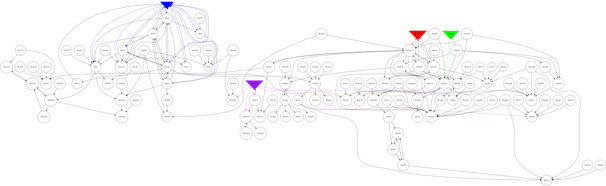
Failure Contagion Analysis: Assess how failures spread across inter-firm trade relationships, identifying both direct and indirect impacts.
Intra-Portfolio Contagion Insights: Evaluate systemic contagion processes within credit portfolios to uncover hidden vulnerabilities.
Positional Credit Risk Analysis (PCRA): Generate all essential data to assess obligors' interconnectedness and positional risks within a portfolio or network.
Analyse inter-firm networks at scale, focus on specific entities, or evaluate the health of entire portfolios to strengthen your risk management strategies.
How It Works?
You define the scope of analysis:
Network Coverage: Specify the inter-firm network or portfolio to analyse.
Starting points: Determine if contagion starts with one company, or with several various starting points at once.
Why It Matters?
Understanding failure contagions in inter-firm networks is vital for:
Risk Mitigation: Identify and contain systemic contagions before they escalate.
Strategic Planning: Enhance decision-making by uncovering network-driven vulnerabilities.
Portfolio Resilience: Build more stable portfolios resistant to systemic shocks.
Who Could Benefit?
Banks & Financial Institutions: Mitigate risks within inter-firm trade or credit networks.
Investors: Understand the broader impact of failures on potential investments.
Regulators: Monitor systemic risks across trade and financial systems.
Consulting Firms: Provide clients with actionable insights into network-driven risks.
Contact Us!
Discover how IFCOP can transform your understanding of systemic risks in inter-firm networks. Reach out today to explore how we can help you uncover and mitigate hidden vulnerabilities.
Go beyond risk assessment—simulate the spread of contagion within inter-firm networks to proactively manage systemic risks and protect your portfolio.